
Google Is Changing Search Again. Will Brands Still Get the Click?
Google announced another round of changes to AI Mode and AI Overviews on October 15, 2026
Links to original sources are being moved higher in generated responses, the company is testing dedicated sections for official websites, and news carousels are expanding into more countries and languages.
It's an interesting move from a company that has spent the past few years making it possible to find answers without opening a single search result.
For publishers, that's been a growing concern. A reader might see a summary of a news story, understand the main points and leave without visiting the publication that reported it. Businesses face a similar problem with informational searches. Someone researching a financial product or technical service may get enough information from Google's AI answer to skip the websites that would previously have received those visits.
Google says its latest changes will make it easier to reach original sources. Whether people will actually use those links is another question.
What changed on October 15, 2026, in three points:
- Links to original sources now appear higher inside AI-generated responses.
- Google is testing dedicated sections for official websites within AI Mode.
- News carousels are expanding into more countries and languages.
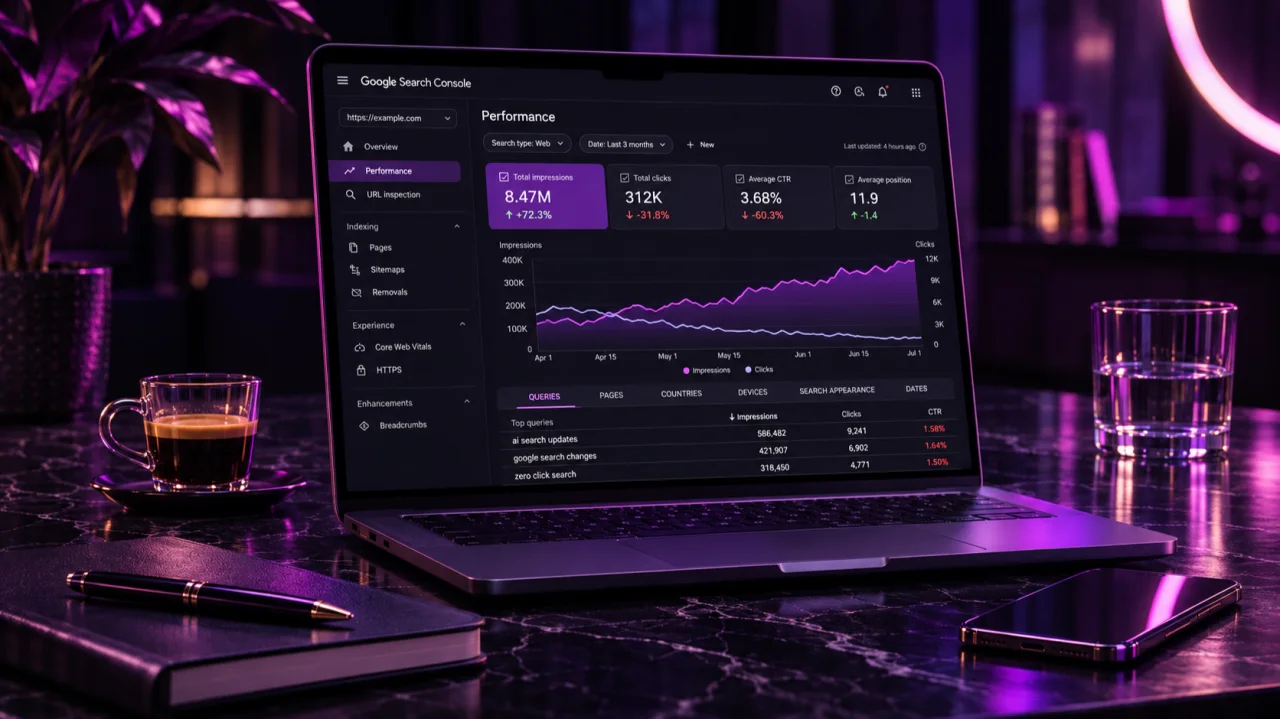
SEO teams are already having to explain some uncomfortable discrepancies in their reports. A website can hold its position for a keyword it has ranked for all year, yet the number of people clicking through keeps dropping. From management's perspective, the investment hasn't changed, the rankings look reasonably healthy, and the traffic is getting worse. It's difficult to explain that combination without looking at what Google is now showing people before they even reach the first organic result.
What Happens to Clicks When Google Provides the Answer?
Pew Research Center examined 68,879 Google searches made by 900 US adults and published its findings in July 2025. The researchers compared people's behaviour on search results pages that included an AI-generated summary with pages that didn't.
The difference was substantial. Users clicked a traditional search result in 8% of visits where an AI summary appeared. Without a summary, the figure was 15%.
The links included inside those AI answers received even less attention. They were clicked in just 1% of visits featuring a summary. Pew also found that browsing sessions ended more frequently on pages with AI-generated answers: 26% of visits, compared with 16% when no summary appeared.
Ahrefs looked at the issue from a different angle in February 2026. Using aggregated Google Search Console data for 300,000 keywords, the company compared changes in click-through rates for informational searches with and without AI Overviews. Its estimate suggested that the presence of an AI Overview was associated with a 58% lower average CTR for the top-ranking page compared with the rate predicted without an AI-generated answer.
That 58% figure attracted attention, understandably. A first-place ranking has traditionally been one of the most valuable positions a website could earn, especially for businesses that have invested heavily in SEO.
There are some important limits to the research, though. Pew watched real searches happen. Ahrefs worked backward from historical data instead. The findings don't prove that every missing click was caused by an AI Overview. Search intent makes a difference, and Google doesn't generate summaries for every type of query. Both studies were also conducted before the changes announced in October 2026.
Even so, the figures put a number on something marketers have been noticing in their own reports. Search visibility and website traffic are becoming less closely connected. For a business that has spent years measuring SEO success through rankings and organic visits, that changes how the results need to be interpreted.
The Trouble With Popular Keywords
Take a payment service provider that handles card acquiring for licensed online casinos.
Its marketing team has built a respectable library of articles over several years. There are explanations of payment gateways, transaction processing, online payment security and various financial technologies. Some of these pages rank on the first page of Google, and a few bring in thousands of visitors every month.
The company is pleased with its SEO visibility. Its business development team is less impressed by the number of suitable merchants getting in touch.
Makes sense, once you think about who's actually reading those articles.
An article explaining what a payment gateway does can be useful to a student doing homework, a shop owner setting up their first checkout, a developer checking documentation. Most of those readers have little reason to contact a provider specialising in acquiring for licensed gambling operators.
Now Google starts displaying AI-generated explanations for more of those general questions. The articles begin losing visitors. Management sees the monthly traffic figures falling and asks the marketing team how it plans to reverse the decline.
The obvious response is to produce more content and compete for additional keywords. But before spending money on another batch of articles, it would be worth examining who was visiting the website in the first place.
Someone entering "what is a payment gateway" into Google is probably at the beginning of their research. Someone searching for "card acquiring for licensed online casinos in Europe" has a more specific problem. They may be looking for a provider that accepts their business model, comparing geographic coverage or trying to find out what kind of acquiring arrangement is available.
There will be fewer people making the second search. For this particular payment company, those people are far more interesting.
The picture gets more complicated once the provider expands into another country. Say the same provider wants merchants in Brazil. Its existing English-language website may explain the company's acquiring services perfectly well for its European audience. That doesn't tell the marketing team which terms Brazilian merchants use when searching for similar services, which payment methods they expect or which aspects of the offering need more explanation.
A translated landing page might be a reasonable starting point. It won't necessarily answer the questions that bring local businesses to Google.
None of this means educational content has become useless. Articles can introduce a brand to people who later become customers, support existing clients and establish technical credibility. But a company needs to know whether that is why it is producing them. A popular keyword can look extremely valuable in an SEO dashboard while contributing very little to the sales pipeline.
Getting the Visitor Is Only Half the Problem
There's another familiar situation in B2B payments marketing. A potential merchant finally reaches a provider's website after searching for an acquiring partner, only to find a homepage full of attractive promises and almost no useful detail.
"Innovative Global Payment Solutions" appears in large letters. The company describes its technology as advanced, flexible, seamless — the usual trio. The design looks expensive.
The visitor, meanwhile, wants to know whether the provider works with licensed casinos in their jurisdiction.
They also need information about supported payment methods and integration requirements. Maybe they want to know whether the company works directly or through banking partners. Either way, the answer is often scattered across the site, buried in a PDF, or missing entirely.
The visitor could send a message and ask. They could also open another search result and find a provider that explains its offering more clearly.
This matters particularly in regulated industries. If a website gives the impression that a service is available in a market where the provider cannot operate, the resulting inquiry is unlikely to become a customer. Someone on the sales team still has to read the message, assess the business and explain why the relationship isn't possible.
A useful SEO audit would catch at least some of these problems. It should look at how the website is organised, whether the important service pages can be found and indexed, and whether the content accurately describes the company's products and geographic coverage. The questions a prospective client asks during an actual sales conversation can be useful material for improving those pages.
Google's own documentation makes a related point about AI Search. According to Search Central, websites don't need additional technical requirements or special optimisation methods to qualify for AI Overviews or AI Mode. The usual fundamentals still apply: pages need to be accessible, properly indexed and supported by useful content.
Worth remembering next time someone promises guaranteed visibility in AI-generated answers. A payment provider that can't clearly explain its services on its own website has a problem it can address today, regardless of how Google's interface changes next month.
Why Industry Publications Still Matter
A company's website is rarely the only place a prospective B2B customer looks before making contact.
A payments executive researching an unfamiliar provider follows a familiar path. They read the service pages, look through the company's management profiles and search for evidence of previous activity in the markets that interest them. At some point, they come across an interview with the CEO in an industry publication.
An interview about entering a newly regulated market might explain what attracted the company to that jurisdiction, the difficulties it encountered after launching and how its offering compares with what's already available. Those are details a prospective partner may struggle to find on a corporate website, and they're considerably more useful than another executive talking about the future of payments.
Where that interview appears makes a difference. A specialist payments publication might have a modest audience, but some of its readers are the people who evaluate acquiring providers for a living. A mainstream news outlet could deliver far more views without reaching many of those decision-makers.
Google's October 2026 changes could make specialist coverage more valuable in another way. The company is expanding news carousels and making links to original reporting more prominent within AI Search. An article in a relevant industry publication could become another way for someone to discover a payment provider, although nobody knows yet how much additional traffic these changes will bring.
There's also the question of attribution. Someone might read an interview, visit the company's website several days later, compare two other providers and eventually contact the sales team directly. The marketing report may record that inquiry as direct traffic, even though the article was part of the research that led to it.
Not every media placement earns its cost, of course. An interview needs something useful to say, and the publication needs an audience that matters to the business. It does mean that measuring a company's online presence only through clicks on its own website can leave out part of how potential customers learn about it.
What Better SEO Results Could Actually Look Like
Back to the same payment provider, now with numbers attached.
The website receives 10,000 organic visits in a typical month. Around 0.5% of those visitors become qualified business inquiries, giving the sales team 50 potential opportunities.
The company then changes where it puts its SEO effort. It starts paying more attention to searches made by prospective merchants and improves the pages explaining its acquiring services, supported markets and technical requirements.
Say monthly traffic drops to 7,000 visits, while the proportion of visitors becoming qualified inquiries rises to 1%. The sales team would receive 70 potential opportunities.
That's 40% more qualified inquiries from 30% fewer visitors.
The numbers illustrate a possible outcome of changing SEO priorities. A company might lose traffic from general educational searches and still end up with more relevant business conversations. Whether that happens in practice depends on the market, the quality of the existing website and how effectively the new strategy reaches prospective customers.
Working towards that kind of improvement involves several fairly practical tasks. The marketing team needs to find out what relevant customers search for, review which pages are already attracting them and identify where the website fails to provide the information they need.
The following section reflects a paid partnership and is included as sponsored content.
This is where a service such as VAK Marketing's AI SEO fits into the process. Its combination of keyword research, search-intent analysis, technical SEO and content optimisation can help fintech, iGaming and Web3 businesses focus their websites on the searches and questions most closely related to their services.
For the payment company in our example, the work might start with a review of Google Search Console data and the inquiries already arriving through the website. The team could compare those findings with competitor pages and look for gaps in its own content. Maybe there's no dedicated page for licensed gambling operators. Or the supported jurisdictions are buried three clicks deep. Or the integration docs are too vague for a technical buyer to act on.
Some improvements would involve rewriting existing pages. Others might require changes to the site's structure or new content covering specific services and markets. The company would also need to make sure the information is accurate, particularly where licensing and geographic availability are concerned.
Once the changes are in place, the marketing team can look beyond keyword positions. Search Console shows which queries bring visitors to which pages. Website analytics helps track what those visitors do, and CRM data provides a clearer picture of the companies making inquiries.
The distinction matters when the numbers begin to move.
A drop in traffic to a popular article about payment terminology may have little immediate effect on merchant acquisition. Losing visitors from a page used by licensed casinos to compare acquiring services would be more concerning. A new article attracting thousands of readers might still justify its cost through brand awareness, even with few direct inquiries. The company needs to know what each part of its content strategy is meant to achieve.
For a provider entering a new market, building visibility among relevant businesses may be the immediate priority. An established company receiving plenty of search traffic could have more to gain from improving its service pages and making the next steps clearer for prospective customers. The most useful SEO metrics will depend on which of those problems the business is trying to solve.
Google's AI-generated answers make the picture less predictable. Plenty of people will get what they need without opening a site. Plenty of others still want to compare two providers side by side before they commit. Google's latest changes may encourage more of those people to visit original sources, but there isn't enough evidence yet to know how much difference they will make.
For now, when organic traffic falls, the first useful question is which searches and pages were affected.
If most of the missing visitors wanted a quick explanation of payment terminology, the commercial damage may be limited. If potential merchants are no longer reaching the pages they need to evaluate the provider, that's a problem worth investigating.
The answer should have more influence on the next SEO budget than the overall traffic figure on its own.
About VAK Marketing
VAK Marketing is an advertising agency that has been promoting blockchain and fintech projects, crypto tokens, IT startups and Web3 ventures since 2018. The agency works with iGaming operators, platforms, PSPs and affiliate teams, as well as exchanges, wallets, DeFi and infrastructure projects in Web3, and helps founders build personal brands and visible expertise in their markets.
More at https://vakmarketing.com/.
Sources
- Google, October 15, 2026 — More Ways to Connect With the Web From Search — https://blog.google/products-and-platforms/products/search/updates-ai-mode-overviews-explore-web
- Pew Research Center, July 22, 2025 — Google Users Are Less Likely to Click on Links When an AI Summary Appears — https://www.pewresearch.org/short-reads/2025/07/22/google-users-are-less-likely-to-click-on-links-when-an-ai-summary-appears-in-the-results
- Ahrefs, February 4, 2026 — Update: AI Overviews Reduce Clicks by 58% — https://ahrefs.com/blog/ai-overviews-reduce-clicks-update
- Google Search Central — AI Features and Your Website — https://developers.google.com/search/docs/appearance/ai-features
- VAK Marketing — AI SEO — AI SEO and SERP — VAK Marketing